
Case study · International project
Drilling waste bioremediation — Samawah, Iraq
A project in Block 12, Samawah, Iraq, on soil and sludge left by drilling operations. IEBCO worked as sub-contractor: supplying the bioremediation agent, and providing consulting and technical monitoring for the treatment operation.
Contract record
Supply of the Bioremediation agent, and consulting and monitoring the implementation of bioremediation operations required for biological treatment of the hydrocarbon contaminations in the polluted site containing soil and sludge residue from oil-drilling activity in oil well (Iraq - Samawa - Block 12)
- Location (as recorded)
- Samawah, Iraq – Block 12
- Contract period
- 2019
- Status
- Completed
- Project type
- Field project
- IEBCO’s role
- Sub-contractor
What the first site visit recorded
The initial visit recorded two contaminated areas: a waste pit holding drilling waste and mud, and a flare pit holding weathered petroleum waste.
Both areas were sampled, and the samples were examined for TPH, PAH compounds and elemental composition.
Initial contamination data
The conditions the work started from
These figures come from the initial site assessment — the state of the contamination when the work was handed over, not the outcome of treatment. They set the scale and the difficulty of the job.
88,000 mg/kg
TPH, waste pit
195,000 mg/kg
TPH, flare pit
Waste pit geometry
The recorded dimensions of the pit are what set the volume that had to be lifted and treated. The drawing below is redrawn from those dimensions.
| Opening, length | 39 m |
|---|---|
| Opening, width | 29 m |
| Base, length | 33 m |
| Base, width | 23 m |
| Total depth | 4 m |
| Depth of oily sludge | 3.5 m |
Role and method
What IEBCO was contracted to do
IEBCO’s scope is explicit in the contract title: supply of the bioremediation agent required for the work, and consulting and monitoring of the biological treatment of the site’s hydrocarbon contamination.
Project activities on record
- Site assessment
- Sampling
- Laboratory analysis
- Production and transport of the bioremediation material
- Excavation and waste transfer
- Bioremediation operations
- Technical monitoring
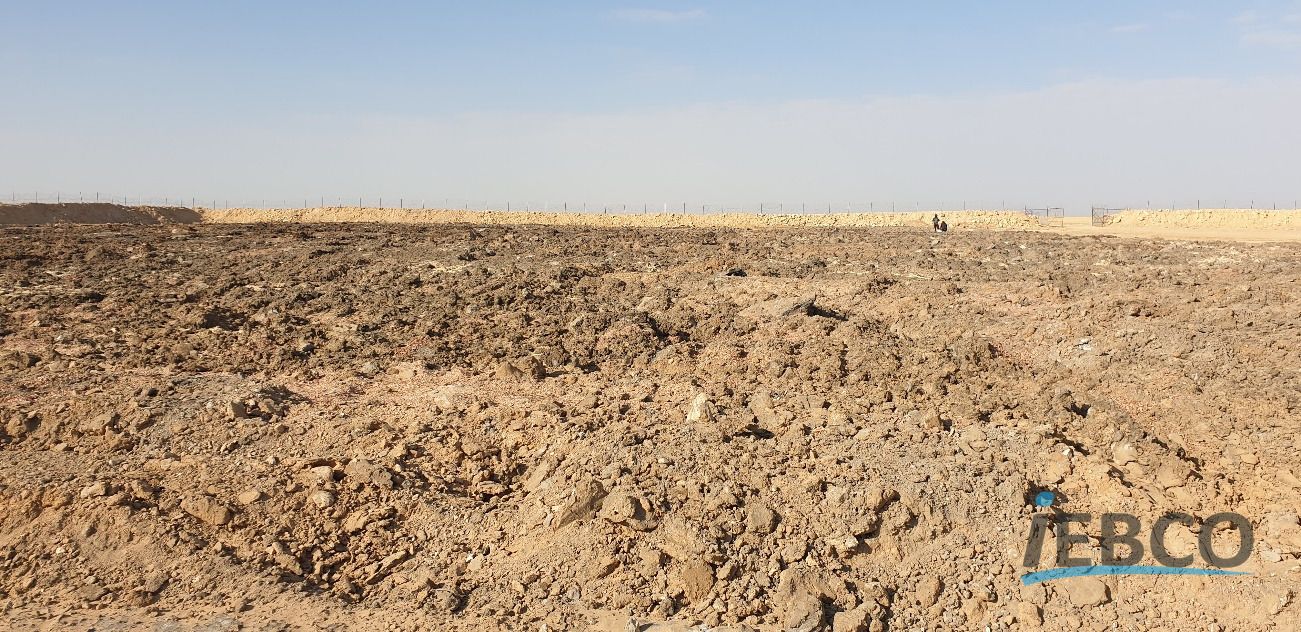
Field execution
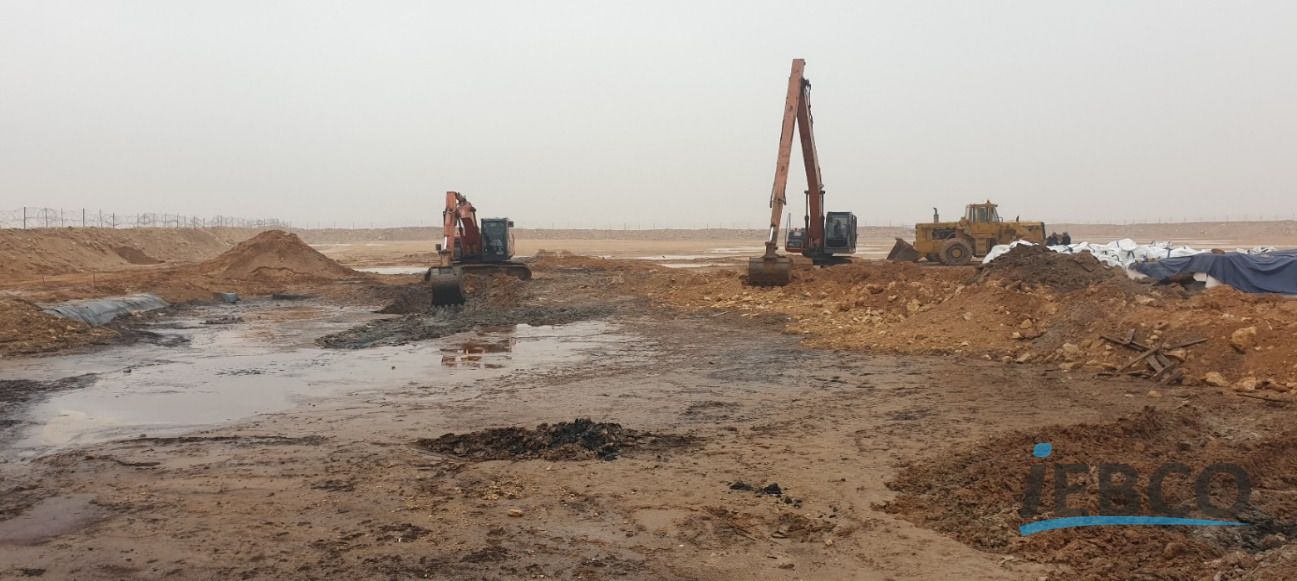
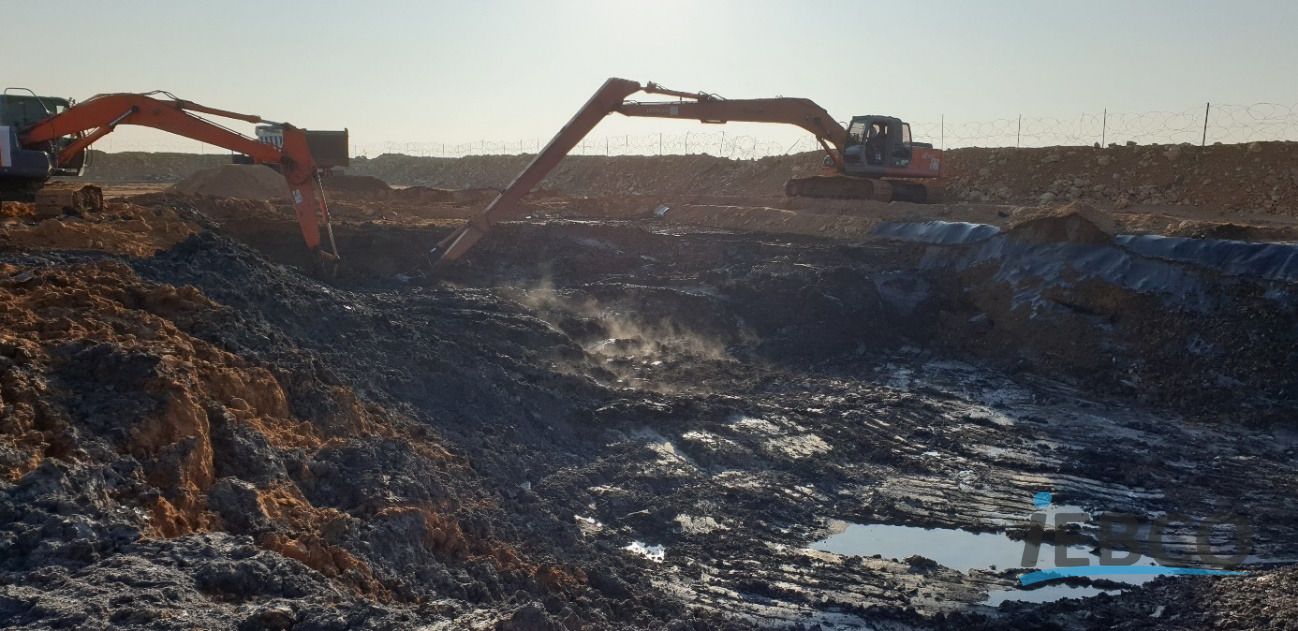
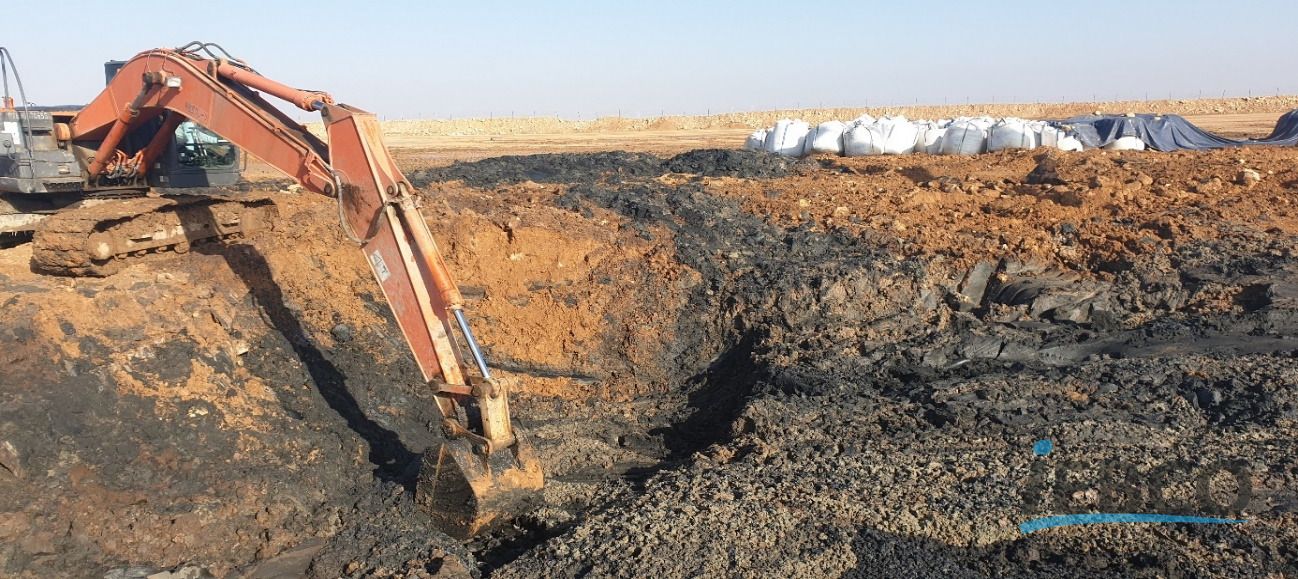
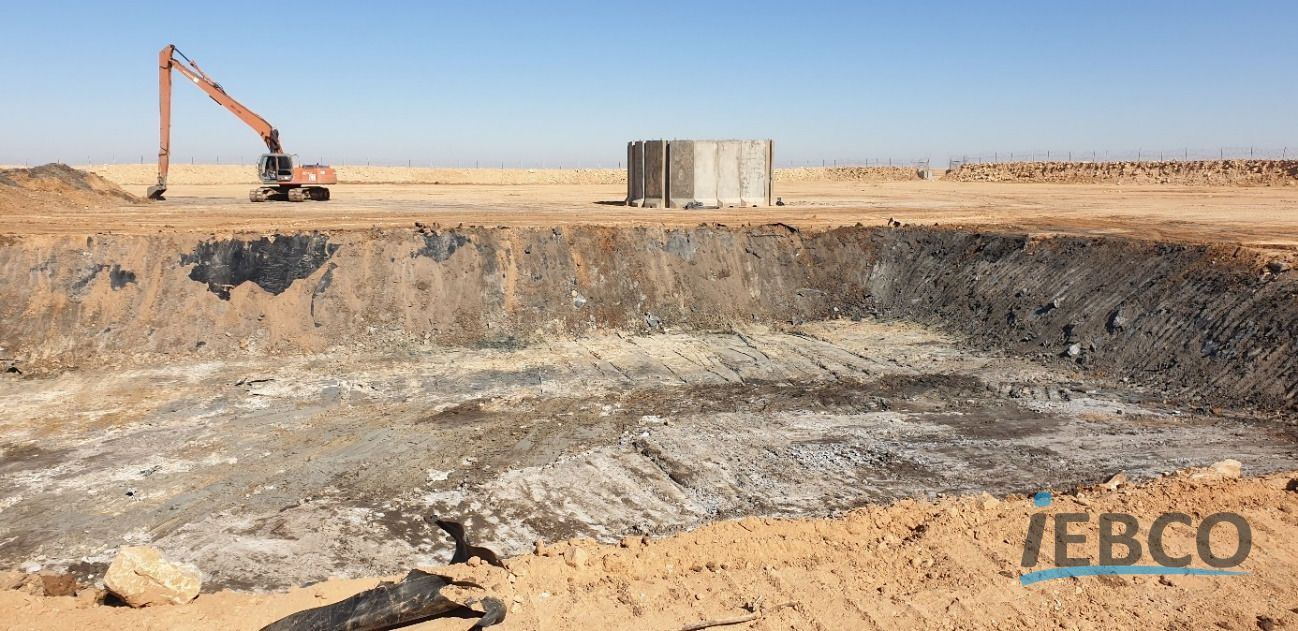
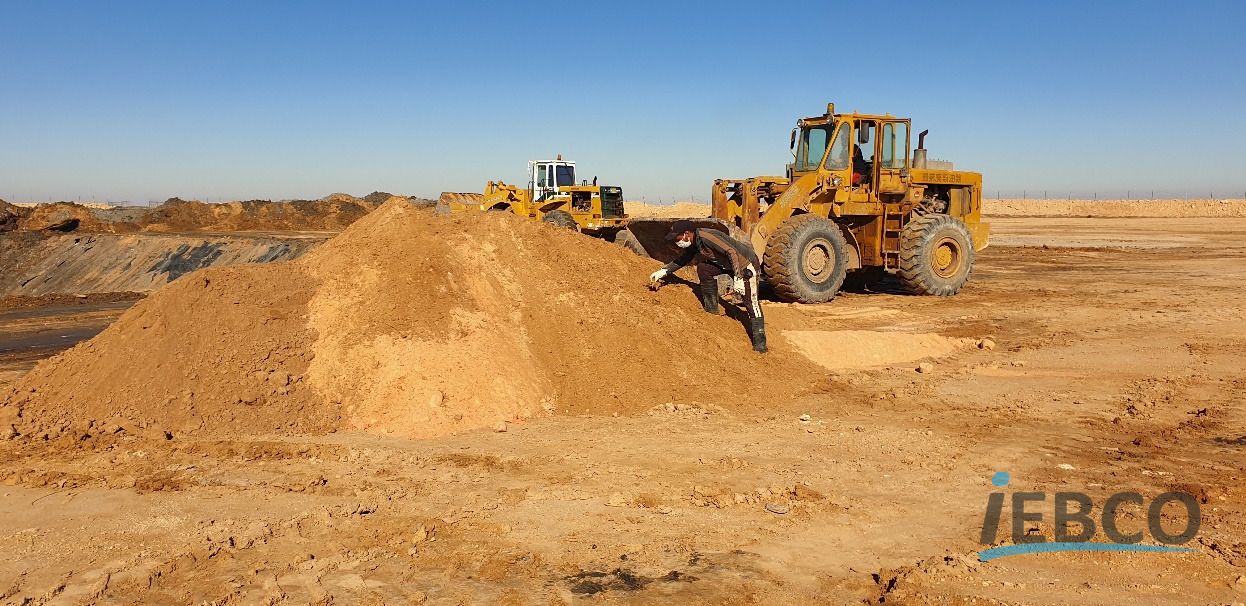
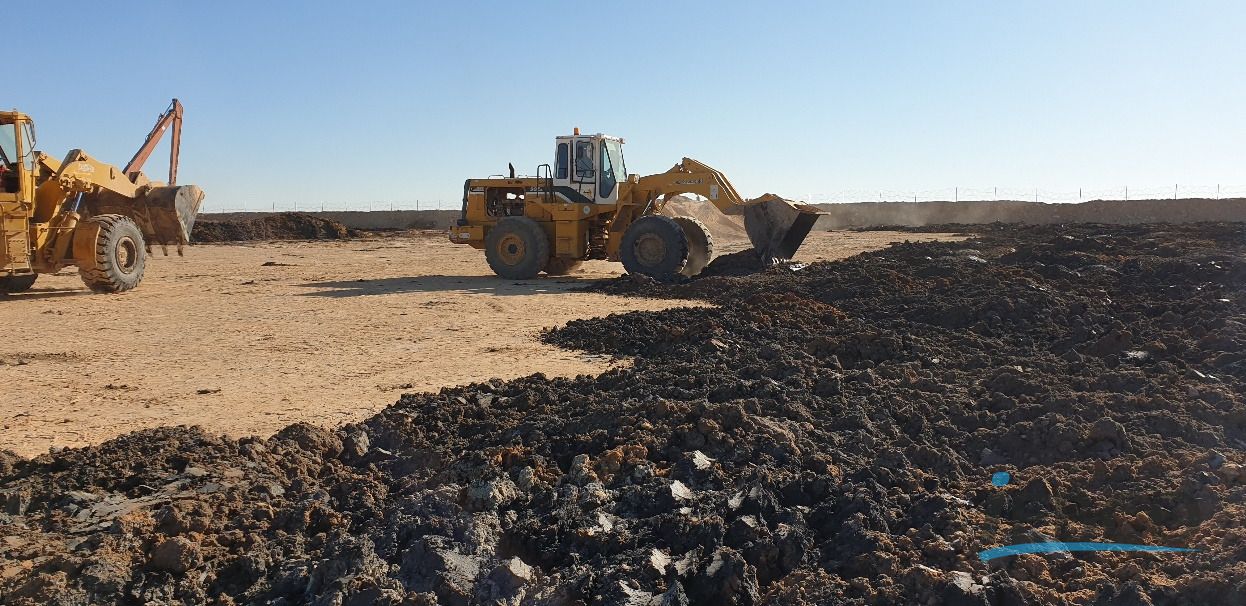
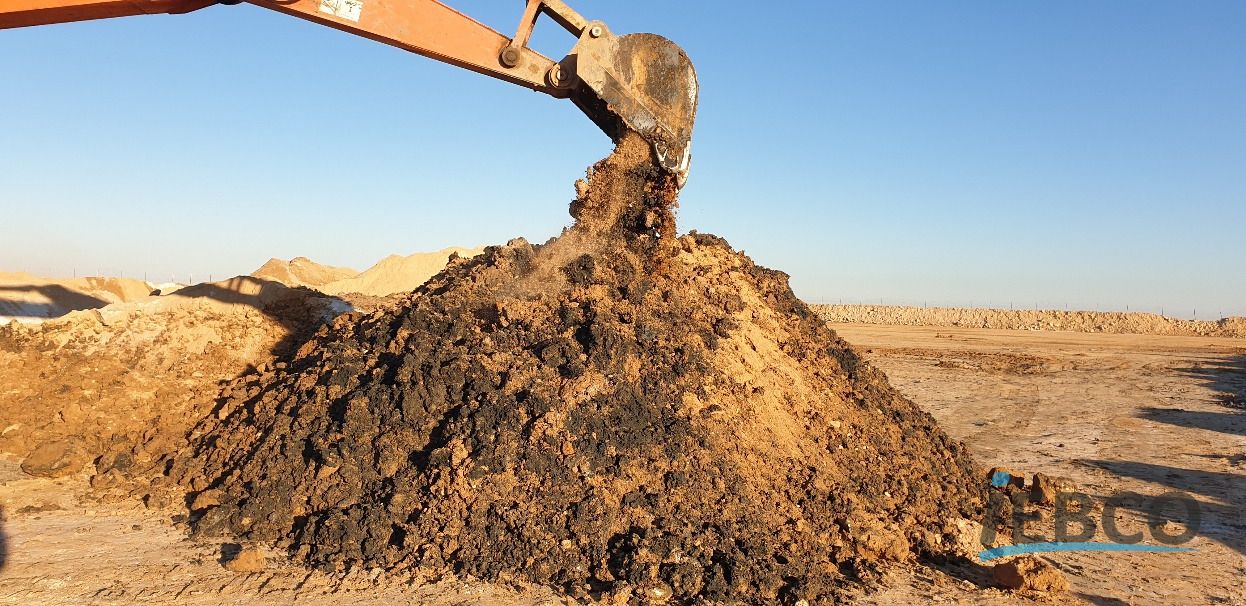
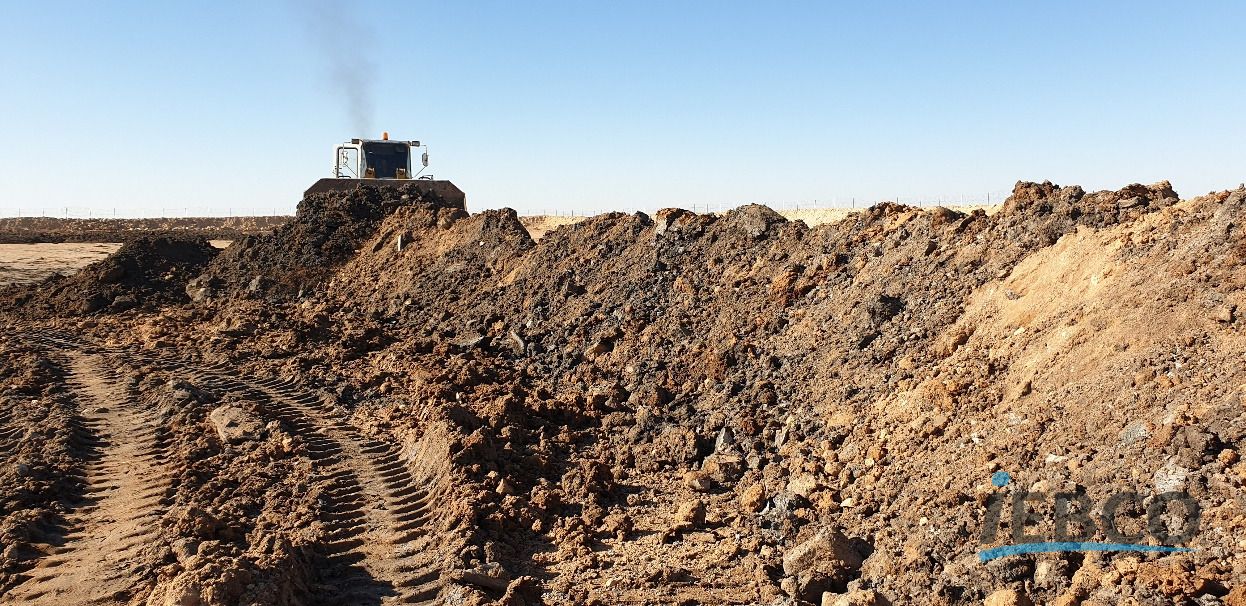
Lift, spread, mix
These photographs come from this project’s own archive. Each caption describes what is visible in the frame and the stage it belongs to.
On the final outcome
The figures on this page belong to the initial site assessment. IEBCO’s recorded scope on this project was supply of the material, consulting and monitoring, and no report of the final treatment outcome is available in the company’s official sources.
So no figure on this page is presented as a result. Every number here describes the contamination as it was before the work started.
Technical note
ICP-MS for elemental analysis and GC-MS for TPH and PAH determination are analytical methods used on this project. They are not IEBCO-owned instrumentation and should not be read as the company’s laboratory facilities.
Project parties
- Client
- Zhongman Petroleum and Natural Gas Group Co., Ltd (Iraqi Branch)
- Main contractor
- Al-Mimar Company for Oil Services, Ltd.
- Sub-contractor
- Industrial and Environmental Biotechnology Company
Start a conversation
Put your site problem to us
The type of contamination, the approximate volume of waste, and initial TPH data where you have it are enough for a first assessment.